The Collector’s Deck

World War II

Follow the war through four theatres.

  • ♣ North Africa & Mediterranean
  • ♦ Pacific & Asia
  • ♥ Eastern Front
  • ♠ Western Front

The Aces depict four wartime leaders: Winston Churchill, Franklin D. Roosevelt, Joseph Stalin and Adolf Hitler. The Kings, Queens and Jacks feature significant figures from each theatre, with each Queen honouring a woman who played a notable wartime role. Within each suit, cards 2–10 follow major battles and events in chronological order.

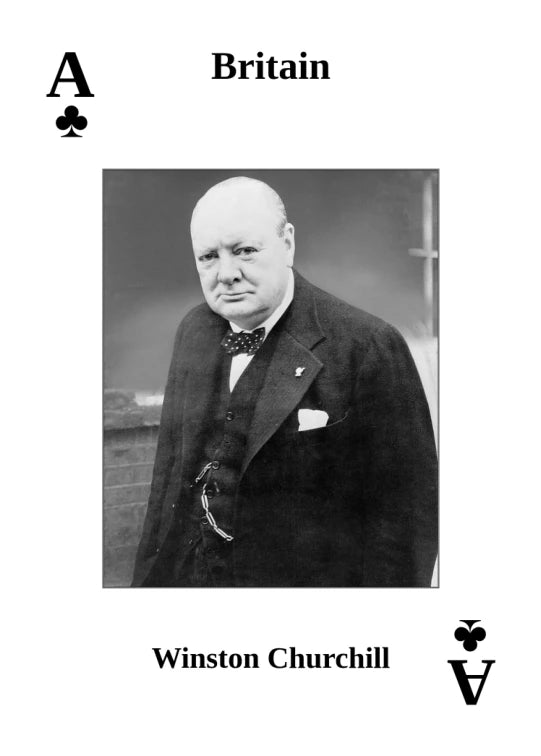
  • A♣ Winston Churchill
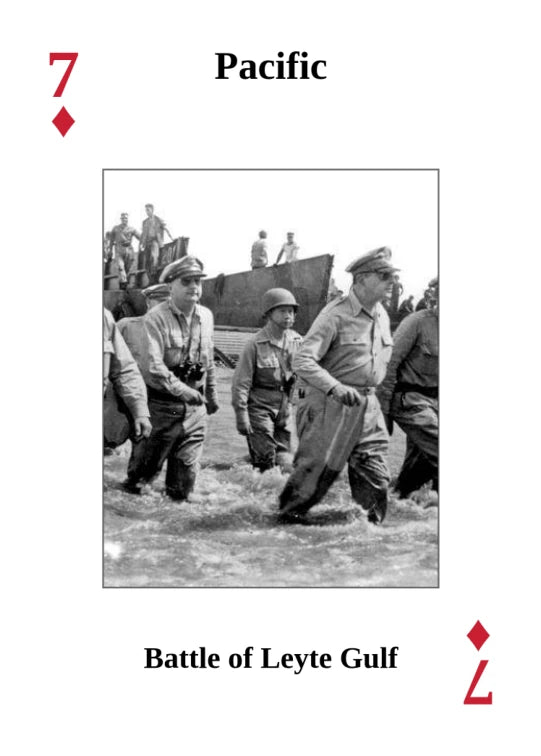
  • 7♦ Battle of Leyte Gulf
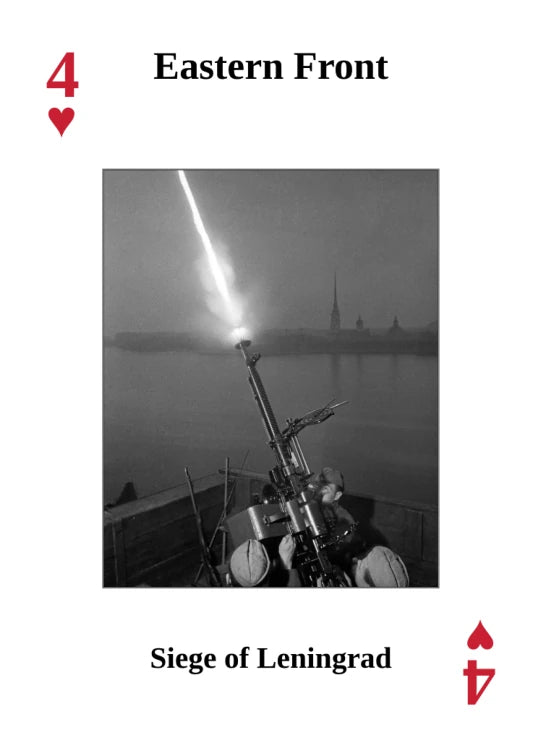
  • 4♥ Siege of Leningrad
Buy this edition
World War II tuck box front artwork
Tuck box
World War II playing card back
Card back
Explore the free taster
A♣Winston Churchill
Winston Churchill playing card

1874-1965. Churchill became British prime minister in May 1940 as Germany overran Western Europe. During the War Cabinet crisis of May 1940, he resisted proposals to explore a negotiated settlement through Italian mediation. He gave political voice to Britain’s decision to continue the war, helped maintain the alliance with the United States and Soviet Union, and participated in the major Allied conferences. His wartime leadership was central to British morale, although his long career and imperial views remain subjects of debate.
7♦Battle of Leyte Gulf
Battle of Leyte Gulf playing card

23-26 October 1944. Japan committed several fleets to attack the Allied invasion of the Philippines. The sprawling battle included actions in the Sibuyan Sea, Surigao Strait, off Cape Engano and off Samar. Japan lost major warships and could no longer conduct large-scale fleet operations, while organised kamikaze attacks emerged as a growing threat.

4♥Siege of Leningrad
Siege of Leningrad playing card

8 September 1941-27 January 1944. German and Finnish forces isolated Leningrad for nearly 900 days. Bombardment, cold and starvation killed enormous numbers of civilians. Supplies crossed Lake Ladoga by water and over the winter ice road, while Soviet offensives gradually reopened communications. The final lifting of the siege became a defining symbol of Soviet civilian suffering and endurance.

Buy this edition

Go to your basket